
Fine-tuning
Use fine-tuning to teach answer style, structure, and judgment from examples.
Fine-tuning is not the same thing as adding documents.
Knowledge teaches facts. Fine-tuning teaches behavior.
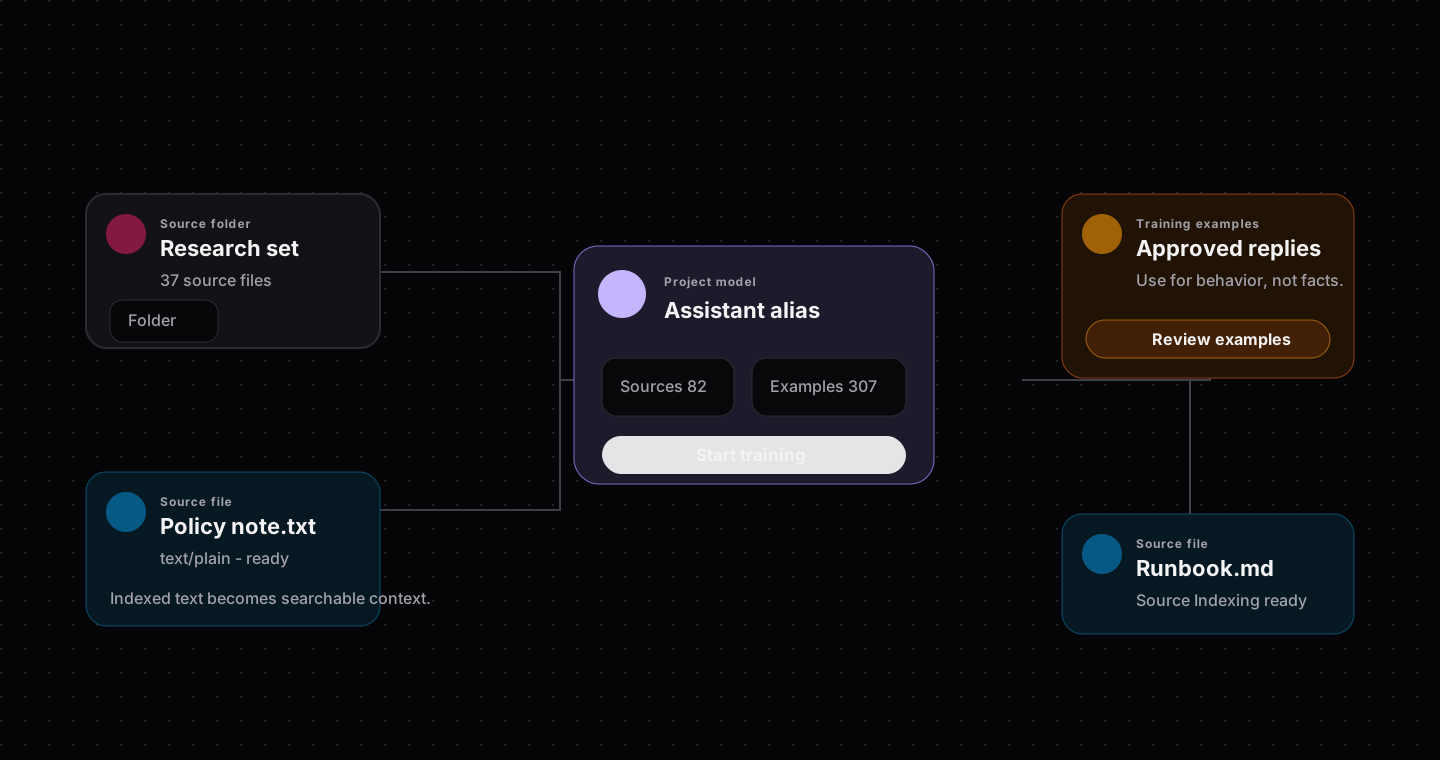
Training examples should be reviewed examples of desired behavior. They should not be raw source dumps.
Use fine-tuning when
- facts are mostly correct but answers feel unlike your team
- replies need a stable format
- the assistant should mirror strong example responses
- similar prompts get inconsistent treatment
- users need judgment, not only lookup
What belongs in training examples
Each example should show a real input and the answer you would want the assistant to produce.
Good examples include:
- support questions with final approved replies
- internal questions with clear policy-based responses
- before-and-after examples of improved answers
- edge cases that show when to refuse or escalate
Bad examples include:
- copied source documents
- vague prompts with generic answers
- examples that contradict current policy
- answers you would not want sent to a user
Fine-tuning does not fix bad sources
If the answer has the wrong facts, fix the knowledge base first.
If the answer has the right facts but bad structure, tone, or judgment, improve examples and fine-tune.
Training workflow
- Collect real prompts and approved replies.
- Remove examples that contradict current source material.
- Review generated examples before training.
- Start training from the project model.
- Wait for run to finish.
- Compare base behavior and project-grounded behavior in Playground.
- Keep best prompt set for regression tests before next run.
Run fine-tuning only after the dataset has enough examples to teach a pattern. More bad examples make the assistant worse faster.
Minimum useful dataset
| Dataset state | Action |
|---|---|
| Fewer than 20 examples | Keep testing and collecting |
| Repeated format visible | Fine-tune can help |
| Contradictory answers | Clean examples first |
| Facts still wrong | Fix knowledge base first |
| Strong style, weak sources | Add or clean source material |